A New Chapter For Me...
I'm sitting in a youth hostel in DC right now, waiting out the time it will take until I can check into my room after a red-eye flight from Los Angeles last night. I have a rash covering the entirety of my body, and i felt like my skin was literally burning off through the entire overnight experience. Yet as I sit on the leather couch, mooching free internet and trying to kill time and itch urges, soaked to the bone from walking from the Metro station in an unpredicted rainstorm, I'm hopeful.
I'm hopeful because I'm headed to participate in Pentecost 2007 tonight, a Sojourners production labeled "Taking the Vision to the Streets". I'm hopeful because i'll hear from Jim Wallis tonight, Shane Claiborne tomorrow and tomorrow night will be able to attend a live debate between Barack & Hillary. I hopeful because this was actually put together, that there was the desire of the organizers but also enough people who care about the poor and the oppressed, about justice and equality to pay money and travel to be there to witness it.
Two weeks ago today, I walked across stage as a college graduate. 7 glorious years in the making, and its done. And i'm here, i care, i'm excited and i am hopeful. and as discouraging and bureaucratic and "jump-through-the-hoops" as i found my 25k a year education, i am the better for it. So bring the rash, bring the insomnia, bring the disillusionment, because i am finding hope in the message of the courageous.
Jun 3, 2007


Apr 20, 2007

When Violence Kills Itself
I’ve always heard the old adage, “violence is a weapon of the weak.” But after events like the Virginia Tech massacre, it’s easy to think that violence has ultimate power. After all, we’ve learned history through the lens of war. And we read the news through acts of violence rather than the hidden acts of love that keep hope alive.
But there is a common thread in many of the most horrific perpetrators of violence that begs our attention – they kill themselves. Violence kills the image of God in us. It is a cry of desperation, a weak and cowardly cry of a person suffocated of hope. Violence goes against everything that we are created for – to love and to be loved – so it inevitably ends in misery and suicide. When people succumb to violence it ultimately infects them like a disease or a poison that leads to their own death. Judas, the disciple who betrayed Jesus with a violent kiss, ends his life by hanging himself with a noose. After his notorious persecutions, the Emperor Nero’s story ends as he stabs himself. Hitler passed out suicide pills to all his heads of staff, and ended his life as one of the most pitifully lonely people to walk the earth. We see the same in the case of Columbine, the 2007 Amish school shootings, the Sept. 11 terrorist attacks, and this recent Virginia Tech massacre – each ends in suicide.
Violence is suicidal. Suicide rates of folks in the military and working the chambers of death row execution are astronomical; they kill themselves as they feel the image of God dying in them.
It is in moments like these violent times that grace looks so magnificent. It is in the shadow of such violence, as was the case after the Amish school shooting, that the victims' grace to the murderer’s family shines so brightly. Sometimes all the peacemakers need to do is practice revolutionary patience, and steadfast hope – for the universe bends toward justice, and the entire Christian story demonstrates the triumph of love. And it makes it even more scandalous to think of killing someone who kills – for they, more than anyone in the world, need to hear that they are created for something better than that.
I am reminded of a letter I got from someone currently on death row. After reading some of my writing, he wrote to me to share that he was a living testimony against the myth of redemptive violence (the idea that violence can bring redemption or peace). This fellow on death row told me that the family of his victim argued that he should not be killed for what he did, that he was not beyond redemption, and so he did not receive the death penalty for his crime. “That gave me a lot of time to think about grace,” he said. And he became a Christian in prison. Another story of scandalous love and grace.
So in these days after Easter, even as we see the horror of death, may we be reminded that in the end love wins. Mercy triumphs. Life is more powerful than death. And even those who have committed great violence can have the image of God come to life again within them as they hear the whisper of love. May the whisper of love grow louder than the thunder of violence. May we love loudly.
Shane Claiborne

Blinding light assaults the darkness;
Children wait for guns to cease.
In the midst of war’s confusion,
Make us instruments of peace.
Hungry for your visitation,
We are waiting –
lost,
afraid.
You alone,
O God,
can save us.
Heal the wounds that we have made.
- poet Jean McMullan, written the morning the Iraq War started
Apr 12, 2007
Sanctuary Cities
Recently, Highstown, New Jersey unanimously approved measures allowing undocumented residents to interact with police and city services without fear of being reported to federal authorities. This action exemplifies the increasing number of "sanctuary cities", with no-questions-asked policies on immigration status.
Amen
Recently, Highstown, New Jersey unanimously approved measures allowing undocumented residents to interact with police and city services without fear of being reported to federal authorities. This action exemplifies the increasing number of "sanctuary cities", with no-questions-asked policies on immigration status.
"Most of us know this town would have a heck of a time trying to run itself these days without the immigrants. They're working at the grocery stores, the fast-food places, they're opening businesses and keeping this town alive and young. We're just being practical by telling them, 'Look, we want you in our community, and we want you to feel like you belong.'"-- Republican Mayor Robert Patten of Highstown, New Jersey
Amen
Brian's Coffee Shop
Recently, I visited a Starbucks Coffee Shop in downtown Spokane. It was a cold night, ten degrees below freezing. I went in looking to read and waste some time before I headed to pick up my fiance at the airport.
I sat down near the door with my cup of coffee and my book and began to read. Before I had time to start, I was interrupted by the scene of a homeless man searching the shop for a place to sit. The downtown Starbucks is open until midnight, and it was obvious that the gentleman was trying to get out of the cold for a bit. I watched as he searched unsuccessfully for a seat, then he began to talk to the customers. I couldn't hear the conversations, but I could see the looks in the eyes of the people; the disgust, the leaning away from the man, the lack of acknowledgement.
Enter the Starbucks supervisor. Aggressive. Loud. "Get out of here. You know you can't be in here." As he moved to the door, I began to hear his plea.
"Just looking for a cup of coffee."
I spoke up, with "He just wants a coffee right?" As I stood to talk to the man, who was now outside, the woman, still fairly angry turned back in. I introduced myself, and said I would like to buy him a cup. When I went to the register, the same woman met me and responded to my order of another coffee.
"Don't you know you're just encouraging them?"
I don't know if it was the tone of her voice. The contempt. The anger in her eyes. Disdain.
But I became frustrated. "It's 20 degrees outside, and I'm supposed to regret helping a man to get a cup of coffee?"
She refuses to serve me. I'm a paying customer. My fiance works at Starbucks.
I ask her name. She refuses that as well.
Go figure.
Starbucks sets up a store in the middle of an urban, poor area, keeps it's doors open when the temperature drops well below freezing, then becomes aggressive when an individual tries to seek some comfort from the invasive cold.
I understand the arguments. I understand the business.
But I refuse to stop understanding man.
Cross the street. 7-11. A different cup of coffee, but the same look. The same disdain from the eyes of the attendant as Brian waits, and watches. Through the glass. Through the cold.
Recently, I visited a Starbucks Coffee Shop in downtown Spokane. It was a cold night, ten degrees below freezing. I went in looking to read and waste some time before I headed to pick up my fiance at the airport.
I sat down near the door with my cup of coffee and my book and began to read. Before I had time to start, I was interrupted by the scene of a homeless man searching the shop for a place to sit. The downtown Starbucks is open until midnight, and it was obvious that the gentleman was trying to get out of the cold for a bit. I watched as he searched unsuccessfully for a seat, then he began to talk to the customers. I couldn't hear the conversations, but I could see the looks in the eyes of the people; the disgust, the leaning away from the man, the lack of acknowledgement.
Enter the Starbucks supervisor. Aggressive. Loud. "Get out of here. You know you can't be in here." As he moved to the door, I began to hear his plea.
"Just looking for a cup of coffee."
I spoke up, with "He just wants a coffee right?" As I stood to talk to the man, who was now outside, the woman, still fairly angry turned back in. I introduced myself, and said I would like to buy him a cup. When I went to the register, the same woman met me and responded to my order of another coffee.
"Don't you know you're just encouraging them?"
I don't know if it was the tone of her voice. The contempt. The anger in her eyes. Disdain.
But I became frustrated. "It's 20 degrees outside, and I'm supposed to regret helping a man to get a cup of coffee?"
She refuses to serve me. I'm a paying customer. My fiance works at Starbucks.
I ask her name. She refuses that as well.
Go figure.
Starbucks sets up a store in the middle of an urban, poor area, keeps it's doors open when the temperature drops well below freezing, then becomes aggressive when an individual tries to seek some comfort from the invasive cold.
I understand the arguments. I understand the business.
But I refuse to stop understanding man.
Cross the street. 7-11. A different cup of coffee, but the same look. The same disdain from the eyes of the attendant as Brian waits, and watches. Through the glass. Through the cold.

"Where are the gentle spirits and the prayerful souls among our leaders? When will we trust the qualifications of credible lifestyle and courageous witness as much as articulation of programs and financial expertise? When will we die to the styles of government and authority that characterize our secular society and choose the style of the gospel? So that what is most evident in those who direct and encourage us is their pilgrim status, their ability to listen and to learn and to change, and their global sensitivity."
-- Joan Puls, "Every Bush is Burning"
Feb 26, 2007

Christian Delegation in Iran
Right now there is a delegation of Christian leaders and thinkers in Iran talking to Muslim religious leaders, with the goal of diverting a potential American-Iranian conflict. One of the members of the Christian group is Jeff Carr, one of the head men from Sojourner's. You can find his letters and thoughts on God's Politics Blog, through BeliefNet.
Here's a link to one of his letters
American Withdrawal?
I am writing to hear thoughts of others, as well as voice some concerns about our current involvement in Iraq and the responsible and viable exit strategies that are being discussed.
I was one of those against the War before the US launched its unilateral campaign. As a pacifist, I was opposed to the direction of the war, and the reasons given to justify the action.
Obviously, I continue to see the war as a losing effort, the deaths of Iraqi's and Americans has gone on too long, however several issues confront me at this time and I would LOVE some input from others as well as some thoughtful and open reflection.
Don't we (America) have some responsibility to the Iraqi people to stay in Iraq until there is some order restored/legitimate government in place? The war never should have happened, and I am saddened by the actions that have taken place....however, leaving now seems to place the Iraqi people in a worse place than they were before the invasion.
I understand the reasoning behind pulling out of Iraq. I understand the questioning of the morality and wisdom of sending another 30,000 American troops to Iraq. Many politicians are (favorably) campaigning to bring back the troops and end the occupation. (notably Obama who would put a date on the exit strategy).
Now as a pacifist, I want the violence, occupation and war to end. However, I tend to think that the withdrawal of American forces would lead to MORE violence in Iraq due to a lack of strong police/military force (the Iraqi police has been ripped apart by corruption and sectarianism). Won't the Iraqi people be subject to more fear, violence and death by the evacuation?
Furthermore, I read that America is tired of losing troops in war with no forseeable end. Our casualty toll however is a fraction of that of Iraqi's. To cut out now potentially saves American lives, but at what cost for Iraqi's? Can anyone really justify the withdrawal of AMerican troops as moral, given the grave implications for the Iraqi future if we do so?
my thoughts: The war never should have happened the way it did. America should not have acted illegally, unilaterally and preemptively. But in doing so we have caused the spiral of destruction and chaos that currently dominates the Iraqi landscape. Because of American irresponsibility and poor anticipation, we MUST see that the Iraqi people do not suffer MORE when we evacuate because the costs of the War are no longer beneficial for US.
How are moral and peaceful thinkers justifying the withdrawal of American troops, when undoubtedly it will lead to the misery of Iraqi's subject to terrorism and sectarian violence?
Help me out. Thanks,
blessings
I am writing to hear thoughts of others, as well as voice some concerns about our current involvement in Iraq and the responsible and viable exit strategies that are being discussed.
I was one of those against the War before the US launched its unilateral campaign. As a pacifist, I was opposed to the direction of the war, and the reasons given to justify the action.
Obviously, I continue to see the war as a losing effort, the deaths of Iraqi's and Americans has gone on too long, however several issues confront me at this time and I would LOVE some input from others as well as some thoughtful and open reflection.
Don't we (America) have some responsibility to the Iraqi people to stay in Iraq until there is some order restored/legitimate government in place? The war never should have happened, and I am saddened by the actions that have taken place....however, leaving now seems to place the Iraqi people in a worse place than they were before the invasion.
I understand the reasoning behind pulling out of Iraq. I understand the questioning of the morality and wisdom of sending another 30,000 American troops to Iraq. Many politicians are (favorably) campaigning to bring back the troops and end the occupation. (notably Obama who would put a date on the exit strategy).
Now as a pacifist, I want the violence, occupation and war to end. However, I tend to think that the withdrawal of American forces would lead to MORE violence in Iraq due to a lack of strong police/military force (the Iraqi police has been ripped apart by corruption and sectarianism). Won't the Iraqi people be subject to more fear, violence and death by the evacuation?
Furthermore, I read that America is tired of losing troops in war with no forseeable end. Our casualty toll however is a fraction of that of Iraqi's. To cut out now potentially saves American lives, but at what cost for Iraqi's? Can anyone really justify the withdrawal of AMerican troops as moral, given the grave implications for the Iraqi future if we do so?
my thoughts: The war never should have happened the way it did. America should not have acted illegally, unilaterally and preemptively. But in doing so we have caused the spiral of destruction and chaos that currently dominates the Iraqi landscape. Because of American irresponsibility and poor anticipation, we MUST see that the Iraqi people do not suffer MORE when we evacuate because the costs of the War are no longer beneficial for US.
How are moral and peaceful thinkers justifying the withdrawal of American troops, when undoubtedly it will lead to the misery of Iraqi's subject to terrorism and sectarian violence?
Help me out. Thanks,
blessings
Feb 16, 2007
The Politics of Progress
Wow. Like I needed another reason to doubt the convictions of some in the Republican party.
"The debate should not be about the surge or its details. This debate should not even be about the Iraq war to date, mistakes that have been made, or whether we can, or cannot, win militarily. If we let Democrats force us into a debate on the surge or the current situation in Iraq, we lose."
- Excerpt of a memo from Reps. John Shadegg (R-AZ) and Peter Hoekstra (R-MI). (Source: Think Progress )


Wow. Like I needed another reason to doubt the convictions of some in the Republican party.
"The debate should not be about the surge or its details. This debate should not even be about the Iraq war to date, mistakes that have been made, or whether we can, or cannot, win militarily. If we let Democrats force us into a debate on the surge or the current situation in Iraq, we lose."
- Excerpt of a memo from Reps. John Shadegg (R-AZ) and Peter Hoekstra (R-MI). (Source: Think Progress )


Jan 3, 2007

When you love people, you see all the good in them, all the Christ in them. God sees Christ, His Son, in us and loves us. And so we should see Christ in others, and nothing else, and love them. There can never be enough of it. There can never be enough thinking about it.
-- Dorothy Day, Social Activist

We are deeply, passionately dedicated to the cause of nonviolence, to the force of truth and love, to soul-force. To those who say that we are naive, utopian idealists, we say that we are the only realists, and that those who continue to support militarism in our time are supporting the progress towards total self-destruction of the human race.
-- Betty Williams, in 1976 Nobel Peace Prize acceptance speech

Darkness cannot drive out darkness; only light can do that. Hate cannot drive out hate; only love can do that. Hate multiplies hate, violence multiplies violence, and toughness multiplies toughness in a descending spiral of destruction....The chain reaction of evil - hate begetting hate, wars producing more wars - must be broken, or we shall be plunged into the dark abyss of annihilation.
-- Martin Luther King Jr.


..never be conceited. With respect to our attitude toward our enemies, this means first, remember that you were God's enemy and that, without having earned it or being worthy of it, you were met with mercy. It means second, remember that God hung on the cross for your enemy too, and love God and God loves you.
- Dietrich Bonhoeffer
Dec 30, 2006

...the only people for me are the mad ones, the ones who are mad to live, mad to be saved, desirous of everything at the same time, the ones who never yawn or say a commonplace thing, but burn, burn, burn like the fabulous yellow roman candles exploding like spiders across the stars...
-- Jack Kerouac, On The Road
Dec 29, 2006


The important thing about protest is not so much the short-range possibility of changing the direction of policies, but the longer range aim of helping everyone gain an entirely new attitude toward war. Far from doing this, much current protest simply reinforces the old positions by driving the adversary back into the familiar and secure mythology of force. Hence the strong "patriotic" reaction against protests in the United States. How can one protest against war without implicitly and indirectly contributing to the war mentality?
-- Thomas Merton, New Seeds of Contemplation
Dec 4, 2006
Holy Sonnet VI
John Donne
At the round earth's imagined corners blow
Your trumpets, angels, and arise, arise
From death, you numberless infinities
Of souls, and to your scattered bodies go,
All whom the flood did, and fire shal o'erthrow,
All whome war, death, age, agues, tyrannies,
Despair, law, chance hath slain, and you, whose eyes
Shall behold God, and never taste death's woe.
But let them sleep, Lord, and me mourn a space,
For, if above all these my sins abound,
'Tis late to ask abundance of Thy grace,
When we are there. Here on this lowly ground,
Teach me how to repent, for that's as good
As if Thou hadst seal'd my pardon with Thy blood.

John Donne
At the round earth's imagined corners blow
Your trumpets, angels, and arise, arise
From death, you numberless infinities
Of souls, and to your scattered bodies go,
All whom the flood did, and fire shal o'erthrow,
All whome war, death, age, agues, tyrannies,
Despair, law, chance hath slain, and you, whose eyes
Shall behold God, and never taste death's woe.
But let them sleep, Lord, and me mourn a space,
For, if above all these my sins abound,
'Tis late to ask abundance of Thy grace,
When we are there. Here on this lowly ground,
Teach me how to repent, for that's as good
As if Thou hadst seal'd my pardon with Thy blood.

Dec 3, 2006

THE UNITED STATES OF BORG
by Kevyn Jacobs
We Are the United States of Borg.
You will be assimilated. Resistance is futile.
We will assimilate your cultural and national distinctiveness into our own.
You will be made to serve the process of globalization.
You will adopt American values as your own.
You will go to work for the global megacorporations which further Americanization of the world.
You will spend your income on American products.
You will drink Coca-Cola. You will eat McDondalds. You will smoke Marlboro cigarettes. You will drive Chevrolets. You will wear American-style clothing. You will listen to music by American artists. You will watch video entertainment produced in Hollywood. You will worship Mickey Mouse. You will use Microsoft software.
Most importantly, you will speak English.
Resistance is futile.
 We will co-opt your culture, so that we may draw off parts of you and make them into our own image. We will adopt your language into the English language. We will adopt foods from your culture and adapt them into our own diets.
Your culture will be assimilated. Your culture will be Americanized. Those parts of your culture which cannot be Americanized will be discarded.
You will re-make your economies into American-style market economies. You will remake your government into Western-style democratic republics. Your people will be allowed to retain their own individualities, but only insofar as it furthers the spread of the consumerist values collective. You will be more concerned with individual freedoms than communal values, so as to futher the cause of individual consumerism. You will be detached from the natural world. You will remodel your cities into American-style cities. You will live in the suburbs.
The process is global. The process is unstoppable. You will be assimilated. You will follow the example of previously assimilated nations. The Borg nations of Europe. BorgJapan. BorgCanada. You will join them. We are the United States of Borg. You will be assimilated.
Resistance is futile.
The Americanized global monoculture is steamrolling indigenous culture. It reminded the author of the way the Borg operate in Star Trek.

Nov 22, 2006
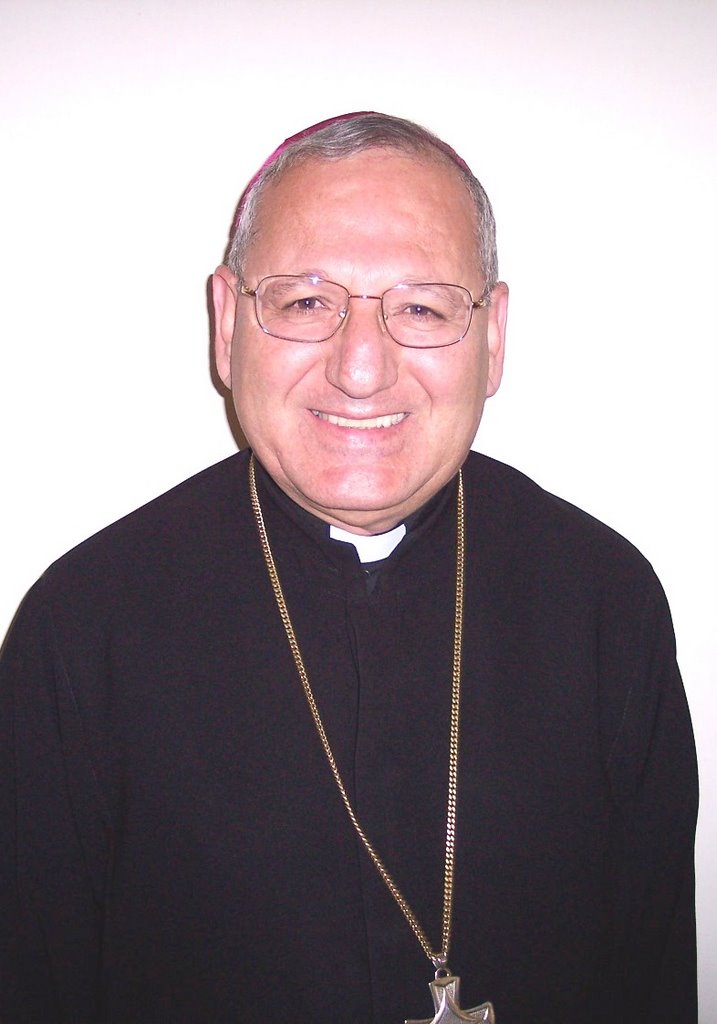
"We have not at all assimilated with the coalition forces. We have nothing to do with them, nor indeed do we have anything to do with the West. We are Christians; we are citizens like everyone else."
- Archbishop Louis Sako of Kirkuk, Iraq, speaking out against proposals by U.S. officials to create "safe havens" for Christians experiencing persecution there. (Source: The Catholic Herald)
This quote is especially interesting if looked at in the light of Bush Admin officials stating before the war, that soldiers would be "greeted as liberators."

On March 16, in an interview on NBC's "Meet the Press" Vice President Cheney said, "I think things have gotten so bad inside Iraq, from the standpoint of the Iraqi people, my belief is we will, in fact, be greeted as liberators." It was then he predicted that the regular Iraqi soldiers would not "put up such a struggle," and that even "significant elements of the Republican Guard . . . are likely to step aside." Asked if Americans are prepared for a "long, costly and bloody battle," Cheney replied: "Well, I don't think it's likely to unfold that way. . . . The read we get on the people of Iraq is there is no question but what they want to the get rid of Saddam Hussein, and they will welcome as liberators the United States when we come to do that." (Read: Article on language used by Bush officials before the war)
Even the Christian Church in Iraq seemingly desires to distance itself from American agenda or action.
While the ultimate effects of the war in Iraq remain to be seen, it is obvious very little good has transpired as a result of American military action. The region is ultimately more chaotic and lawless, there is no clear leadership and a seeming power struggle has brimmed on eruption.
What's outcome? Do troops need to start leaving? Do more troops need to come in as support? Both have been proposed recently.
Two sides to this argument: If American troops leave, it protects from suffering more American loss (in troops and in funds) and to some extent, admits, that indeed the Iraq War effort and motivation was lost. The region remains in mass chaos, suffering the damages of sectarian violence and a lack of real political power. America has to admit defeat and as long as violence and chaos reign in the region, the more America will be held responsible for their action and the lack of respect for international cooperation. Even more concerning is that Iraq may indeed be worse off (Read: UN Secretary General Kofi Annan's take). If future Iraqi government becomes closely aligned with Iran, or a brutal regime evolves as a result of sectarian violence and terror, America will look even more foolish and be held responsible for incompetence.
If American troops stay and bolster military support, it will undoubtedly continue to harm the image of the West in the Middle East, there will continue to be losses of American lives and simultaneously continue to fuel the recruitment and advances of terrorist activity, not just in Iraq, but around the globe. As exemplified since the beginning of the war, America has no effective course of action and no way to control guerilla and terrorist action. Not only does America's tarnished image suffer from further ineffectiveness, but it will also serve to similar groups as to what America can and cannot deal with.
 America is in a tough spot. There seems to be no path or direction which will be helpful to the situation, or the country's image. So where does Bush go from here? He starts apologizing and admitting that "staying the course" isn't always viable. He makes amends with the United Nations and Kofi Annan. He meets with local and national figure heads in the Middle East and seeks to cooperate with them in achieving some stability in the region, bolstered by a combination of aid incentives and "eating crow". The American people were told that Iraq was a threat to national security. The American president however, has caused even more damage to the security through illegitimate action of unilateral war and preemptive strikes. It seems the only way to start to remedy these abuses and violations is to start by apologizing.
Nov 12, 2006
Embryonic Stem Cell Research
Why is this such a big issue? What do we know?
This issue is not as complicated as it may seem. In my researching the ins-&-outs of this whole debate, I've actually been struck by the simplicity of the arguments.
First, stem cell research (both adult stem cell & embryo stem cell) has yielded results to problems that excite the medical community. The difference between the capabilities of the two is easy to grasp....adult stem cells can lead to progress, but are somewhat limited in their capacity for wide-range effectiveness, while embryonic stem cells seem to have limiteless potential in what can be achieved. Adult stem cells have been productive, however only capable of achieving success in a small amount of medical breakthroughs. This is due to the cells being more "mature" and less capable of "change". It is the embryonic stem cells that offer the most extraordinary scientific breakthroughs, as they are seemingly capable of forming into ANY cells that a body may need.
Can you (can anyone) imagine walking into a room, where several hearts are beating, having been composed and nurtured from embryonic stem cells? Are you aware of the incredible capabilities this could allow if research is given a green light and more testing and understanding is grasped?
So we know that stem cell research can be a viable option for curing disease (evidenced by success of adult stem cells). True, however, that researchers have not unlocked all the mystery of what the embryonic stem cell is capable of, or if they can control the power of these cells to yield the necessary results. Imagine if they could? What is stopping them?
What is stopping continued research in finding ways to cure
Why is this such a big issue? What do we know?
This issue is not as complicated as it may seem. In my researching the ins-&-outs of this whole debate, I've actually been struck by the simplicity of the arguments.
First, stem cell research (both adult stem cell & embryo stem cell) has yielded results to problems that excite the medical community. The difference between the capabilities of the two is easy to grasp....adult stem cells can lead to progress, but are somewhat limited in their capacity for wide-range effectiveness, while embryonic stem cells seem to have limiteless potential in what can be achieved. Adult stem cells have been productive, however only capable of achieving success in a small amount of medical breakthroughs. This is due to the cells being more "mature" and less capable of "change". It is the embryonic stem cells that offer the most extraordinary scientific breakthroughs, as they are seemingly capable of forming into ANY cells that a body may need.
Can you (can anyone) imagine walking into a room, where several hearts are beating, having been composed and nurtured from embryonic stem cells? Are you aware of the incredible capabilities this could allow if research is given a green light and more testing and understanding is grasped?
So we know that stem cell research can be a viable option for curing disease (evidenced by success of adult stem cells). True, however, that researchers have not unlocked all the mystery of what the embryonic stem cell is capable of, or if they can control the power of these cells to yield the necessary results. Imagine if they could? What is stopping them?
What is stopping continued research in finding ways to cure

A Take On Election Results
by Jim Wallis
BeliefNet.Com
Perhaps most interesting in this campaign were some of the negative Democratic ads. They simply assert that the Republican candidate agrees with George W. Bush. That’s all they tried to prove and trotted out the percentage of times the candidate has voted for President Bush’s agenda. That was extraordinary. Just to attach a Republican to the record of their own President was negative enough in this election, and Republicans were running away from their President.
In the final week of the campaign, the President himself weighed in with his own negative campaigning when he told an audience in Texas (one of the few places who still wanted him to visit) that “the terrorists win and America loses” if the Democrats won this election. His problem is that more and more Americans think statements like that are ridiculous. And that Bush’s continual assertions about winning the war in Iraq (despite the obvious facts) are also ridiculous, and that the opposite is now true—that America is losing around the world and the terrorists are winning BECAUSE of George Bush’s complete disaster in Iraq.
Iraq is one of the biggest reasons that the Republicans are losing tonight. With a unique combination of arrogance and incompetence Bush, Rumsfeld, and Cheney are proudly going full speed ahead in their deadly war in Iraq, despite the growing opposition from all sides of the political spectrum and even from the military. It must now be said that George Bush and his partners in the crime of Iraq are unnecessarily killing lots of people—both Americans and Iraqis—with no plan to stop the killing. So they must now be stopped, and that is a big part of tonight’s message.
It’s the reason that both Republican and Democratic candidates are promising to find new ways of trying to resolve the war in Iraq rather than simply repeating, “stay the course.” The Bush/Rumsfeld/Cheney course must now be stopped. Whatever the outcome of the election, Iraq must be the first item on the agenda of the next Congress.
Oct 12, 2006
Nonviolence and The Strategy Against Terrorism
by David Cortright
In the months after 9/11, Jim Wallis challenged peace advocates to address the threat of terrorism. “If nonviolence is to have any credibility,” he wrote, “it must answer the questions violence purports to answer, but in a better way.” Gandhian principles of nonviolence provide a solid foundation for crafting an effective strategy against terrorism. Nonviolence is fundamentally a means of achieving justice and combating oppression. Gandhi demonstrated its effectiveness in resisting racial injustice in South Africa and winning independence for India. People-power movements have since spread throughout the world, helping to bring down communism in Eastern Europe and advancing democracy in Serbia, Ukraine, and beyond. The same principles - fighting injustice while avoiding harm - can be applied in the struggle against violent extremism.
Bush administration officials and many political leaders in Washington view terrorism primarily through the prism of war. Kill enough militants, they believe, and the threat will go away. The opposite approach is more effective and less costly in lives. Some limited use of force to apprehend militants and destroy training camps is legitimate, but unilateral war is not. In the three years since the invasion of Iraq, the number of major terrorist incidents in the world has increased sharply. War itself is a form of terrorism. Using military force to counter terrorism is like pouring gasoline on a fire. It ignites hatred and vengeance and creates a cycle of violence that can spin out of control. A better strategy is to take away the fuel that sustains the fire. Only nonviolent methods can do that, by attempting to resolve the underlying political and social factors that give rise to armed violence.
The most urgent priority for countering terrorism, experts agree, is multilateral law enforcement to apprehend perpetrators and prevent future attacks. Cooperative law enforcement and intelligence sharing among governments have proven effective in reducing the operational capacity of terrorist networks. Governments are also cooperating to block financing for terrorist networks and deny safe haven, travel, and arms for terrorist militants. These efforts are fully compatible with the principles of nonviolence.
Terrorism is fundamentally a political phenomenon, concluded the U.N. Working Group on Terrorism in 2002. To overcome the scourge, “it is necessary to understand its political nature as well as its basic criminality and psychology.” This means addressing legitimate political grievances that terrorist groups exploit - such as the Israel-Palestine dispute, repressive policies by Arab governments, and the continuing U.S. military occupation in Iraq. These deeply-held grievances generate widespread political frustration and bitterness in many Arab and Muslim countries, including among people who condemn terrorism and al Qaeda’s brutal methods. As these conditions fester and worsen, support rises for the groups that resist them. Finding solutions to these dilemmas can help to undercut support for jihadism. The strategy against terrorism requires undermining the social base of extremism by driving a wedge between militants and their potential sympathizers. The goal should be to separate militants from their support base by resolving the political injustices that terrorists exploit.
A nonviolent approach should not be confused with appeasement or a defeatist justification of terrorist crimes. The point is not to excuse criminal acts but to learn why they occur and use this knowledge to prevent future attacks. A nonviolent strategy seeks to reduce the appeal of militants’ extremist methods by addressing legitimate grievances and providing channels of political engagement for those who sympathize with the declared political aims. A two-step response is essential: determined law enforcement pressure against terrorist criminals, and active engagement with affected communities to resolve underlying injustices. Ethicist Michael Walzer wrote, counterterrorism “must be aimed systematically at the terrorists themselves, never at the people for whom the terrorists claim to be acting.” Military attacks against potential sympathizers are counterproductive and tend to drive third parties toward militancy. Lawful police action is by its nature more discriminating and is more effective politically because it minimizes predictable backlash effects.
Gandhi’s political genius was in understanding the power of third party opinion. He did not try to challenge the British militarily but instead organized mass resistance to weaken the political legitimacy of the Raj. The nonviolent method, Reinhold Niebuhr wrote, undermines the authority and “moral unction” of the adversary. Gandhi realized that political struggles are ultimately a battle for hearts and minds. In all his campaigns, he assiduously cultivated the support of third parties by avoiding harm to the innocent and addressing legitimate grievances. These are essential insights for the struggle against terrorism. The fight will not be won on the battlefield. The more it is waged on that front, the less likely it can be won. The goal of U.S. strategy, said the 9/11 Commission, must be “prevailing over the ideology that contributes to Islamic terrorism.” Nonviolent resistance is the opposite of and a necessary antidote to the ideology of extreme violence. Gandhi often said, “An eye for an eye leaves the whole world blind.” Better to keep our eyes open as we search for more effective means of eroding support for extremism, while protecting the innocent and bringing violent perpetrators to justice.
David Cortright is the author of Gandhi and Beyond: Nonviolence for an Age of Terrorism (Paradigm Publishers, 2006) and co-founder of the Center on Global Counter-Terrorism Cooperation.
Subscribe to:
Posts (Atom)


 Posts
Posts

